Books that check
themselves
Every dollar captured and coded. The ledger kept, the bank reconciled, the month closed, the return written. And when something is wrong, it says so in plain English, names the document, and offers the fix.
Every screen on this page is the real product, over a real set of books.
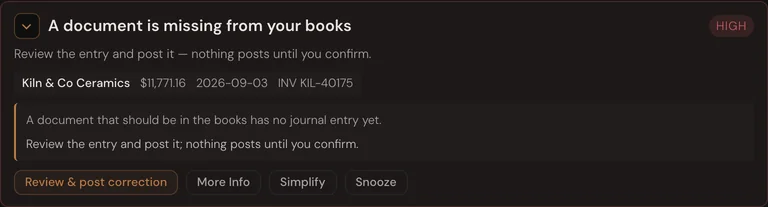
It finds the problem, names the document,
and offers the fix.
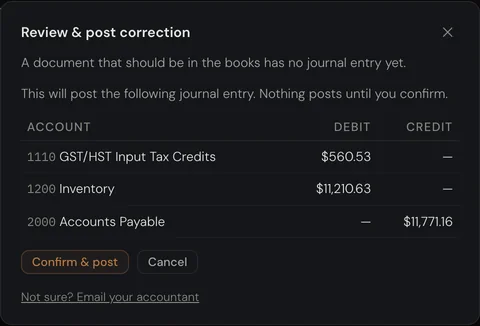
Read what it will post. Then post it
A supplier bill was approved but its journal entry never posted, so Accounts Payable stopped adding up. Talisk found it on its own check, and the fix is one button. It shows the literal debit and credit lines it is about to post, and nothing posts until you confirm.

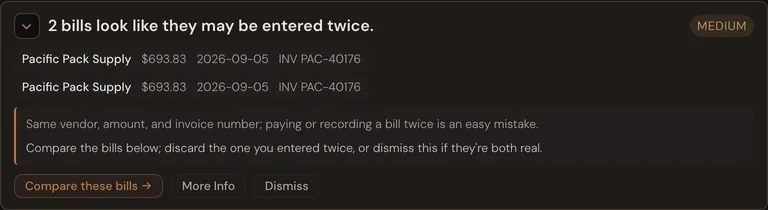
Two bills, one invoice number
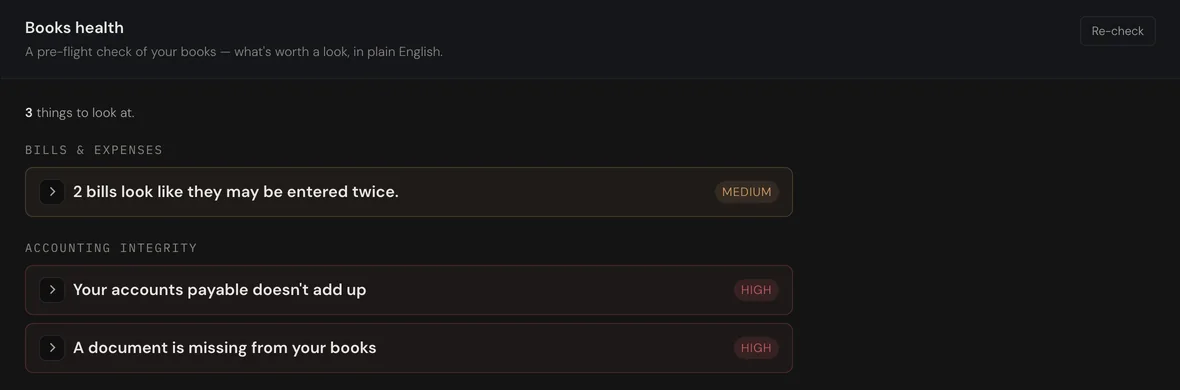
The same supplier, the same amount, the same invoice number, entered twice. Paying it twice is an easy mistake and an expensive one. Talisk puts both on the card, side by side, and asks. Compare them, discard the copy, or dismiss it if they really are two bills.
Sixty-one checks, each time you open the books.
Most days, nothing to say.
Everything a set of books needs. Kept, not summarised
The general ledger is the one source of truth. Every payout, bill, invoice and tax line posts to it, so every report derives from the same numbers and ties out to the cent.
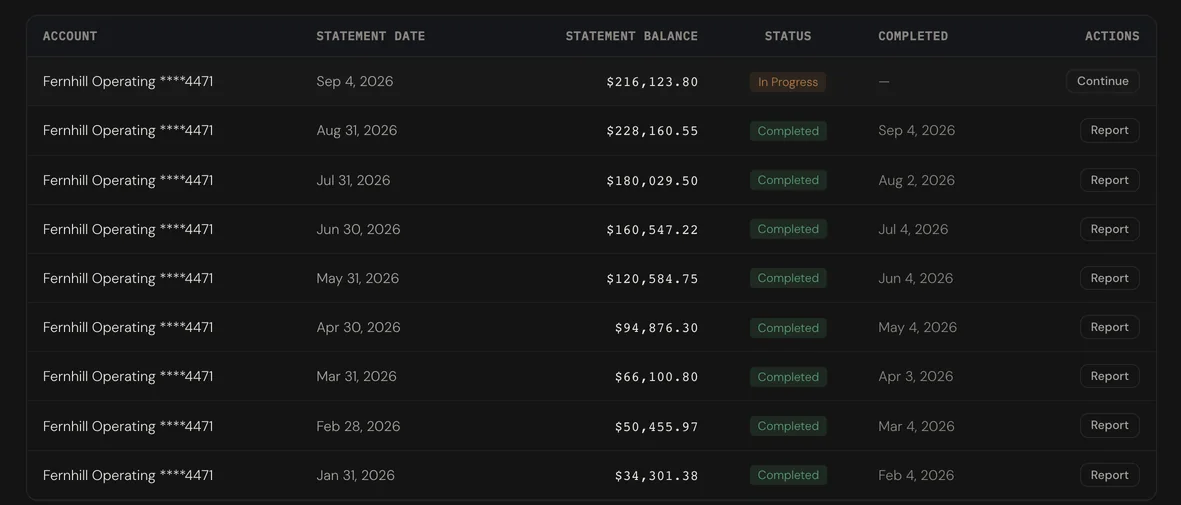
The bank reconciled, every month
Statement in, feed in, lines matched to bills and payouts. The difference reads zero before the month closes, and the reconciliation is kept.
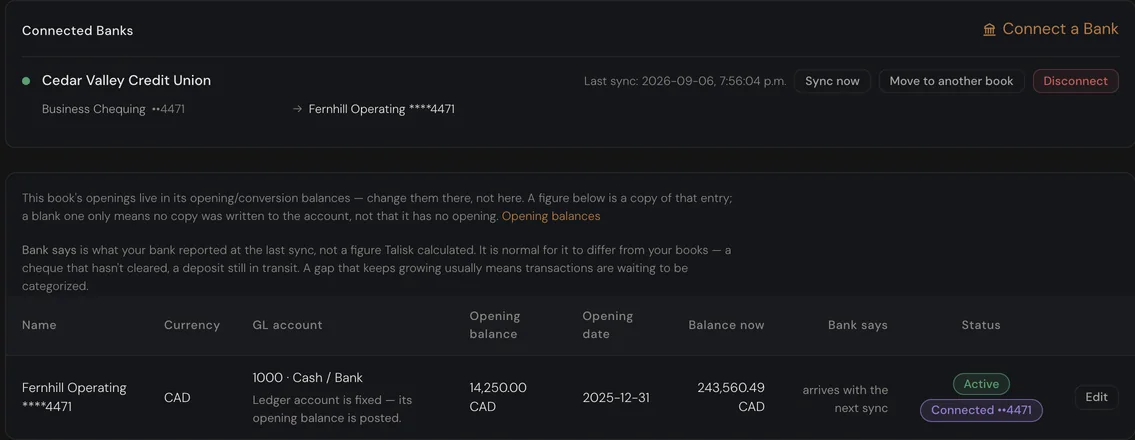
A bank feed that proves itself
Connect the bank and the feed checks itself against the bank's own balance. A statement you upload is verified against its own closing figure, and a line the feed missed is named.
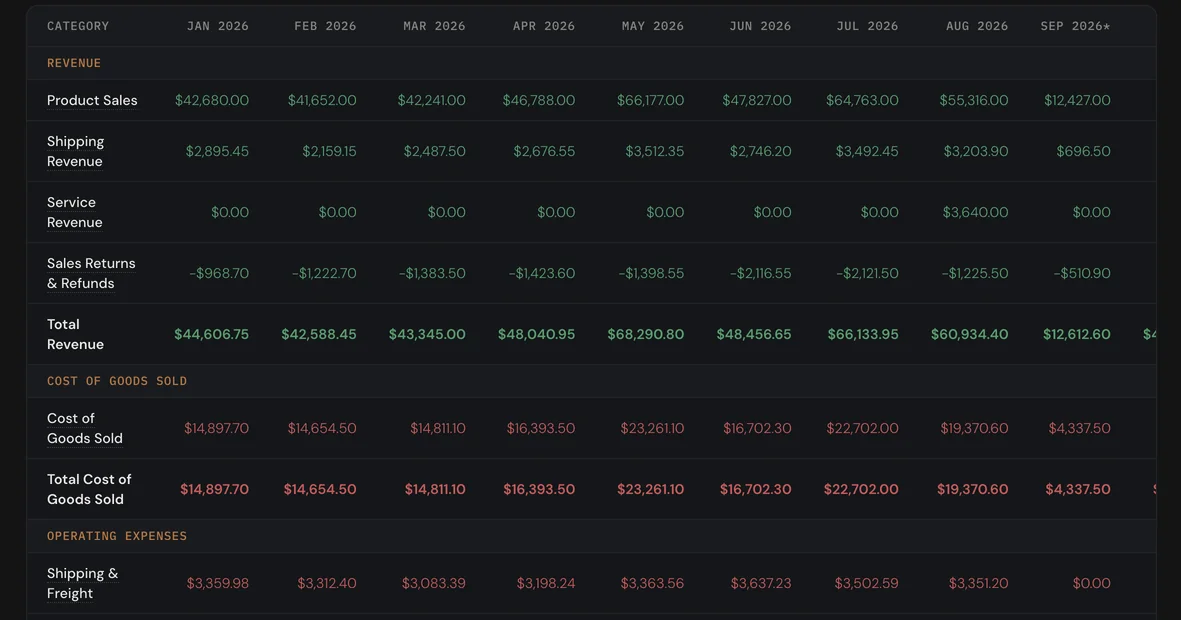
Reports from the ledger, not beside it
Profit and loss by month, balance sheet, cash flow, agings. Trend columns, prior-period comparison, cash or accrual basis. The same numbers on every page.
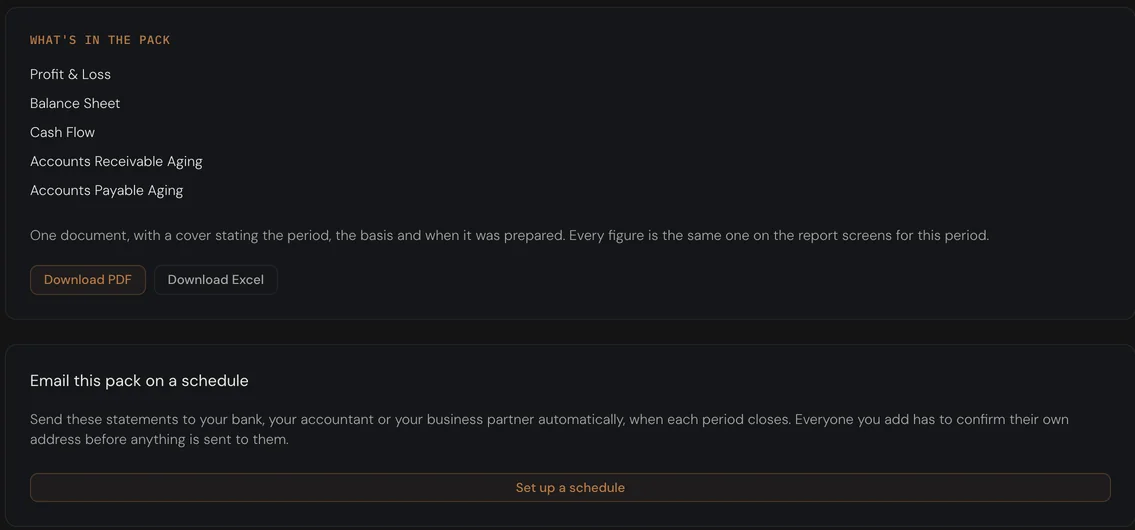
The pack that sends itself
One PDF with the statements and a cover. Email it to your accountant or your bank on a schedule, monthly or by filing period. What was sent is kept exactly as sent.
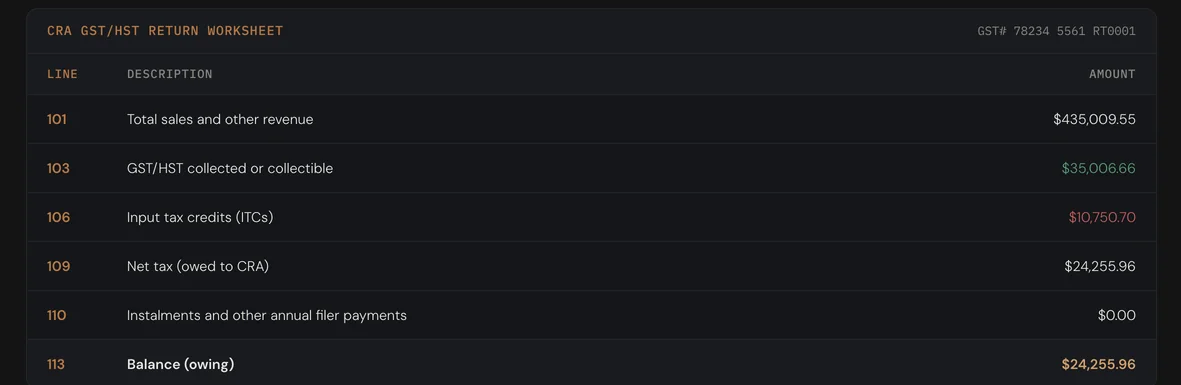
The return, written before it is due
GST/HST, PST and QST tracked as you go, on the province's own filing periods. Mark a period filed and its figures are frozen, so a late bill can never quietly rewrite a return you already sent.
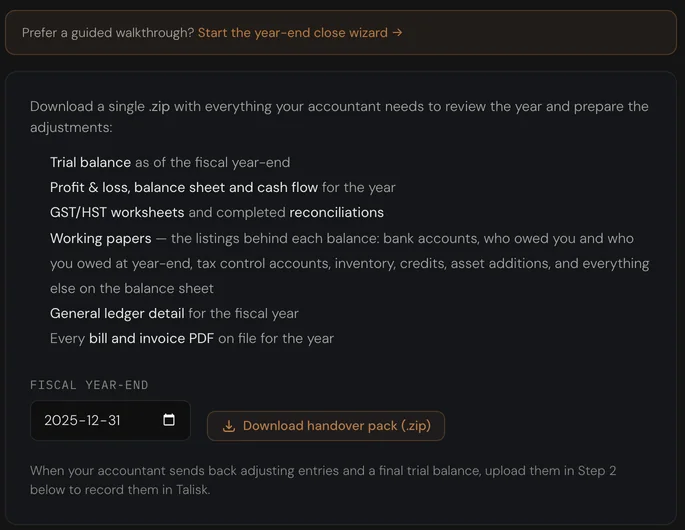
Working papers for your accountant
At year-end, the trial balance and the listings behind every line: reconciliations, receivables and payables in detail, capital additions, what is sitting in prepaids and accruals. One zip, and their adjusting entries come back in.
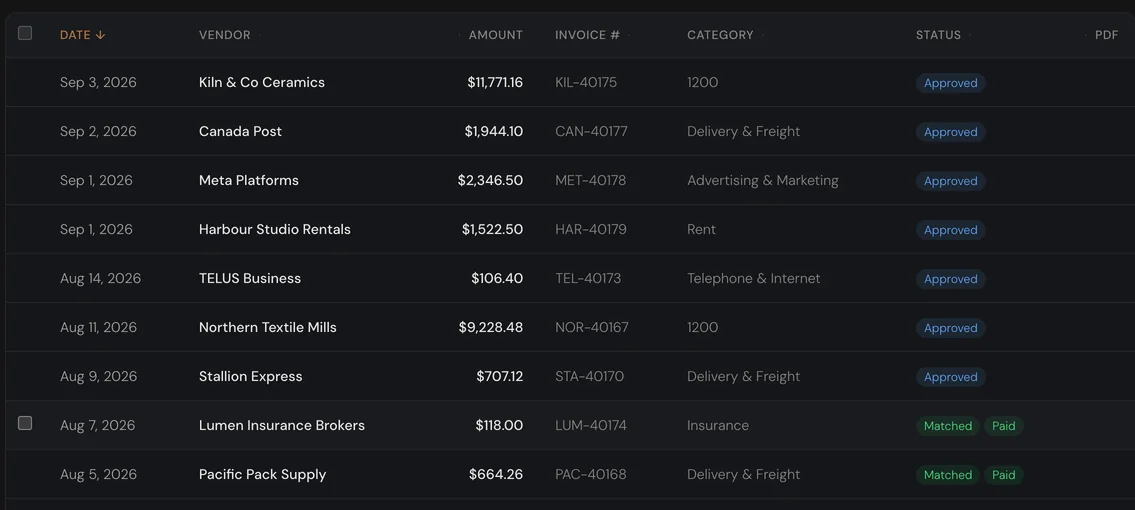
Every document, kept and findable
Each bill with its PDF, its category and where it stands: approved, matched, paid. Search by supplier, amount or invoice number, or download the year in one go.
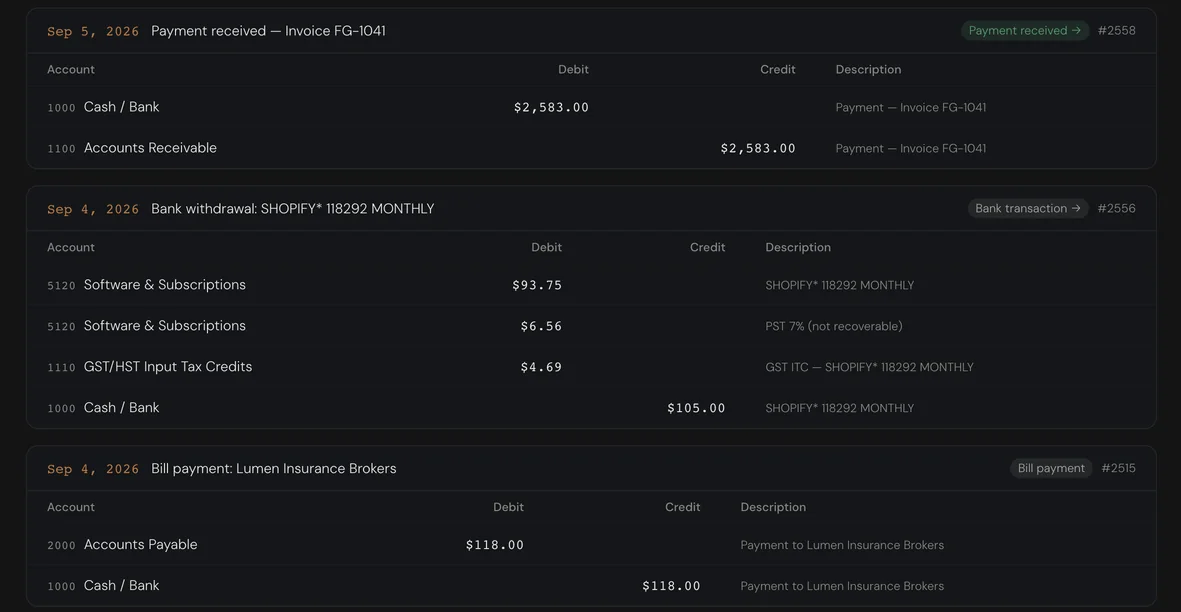
A journal you can read
Every posting is a real entry with its source named. Open any figure on any report and read the lines behind it.
The receipt goes in from the till
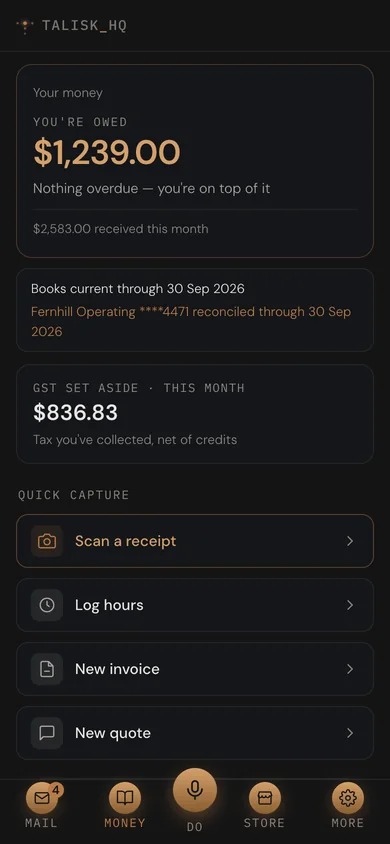
Snap a receipt on your phone and it is read, coded and waiting in the books before you are back in the van. The same money view, the same books, on the phone you already carry.

It does the bookkeeping. Your accountant does the judging
Every figure, every listing
The capital additions, the contents of the accruals, the filing worksheet. Everything a professional needs in front of them to make a call.
Never the call itself
No depreciation schedule, no adjusting entry it cannot derive from a captured fact, no tax strategy, no filing on your behalf. Those stay with the person whose name goes on them.
Their entries come back in
Year-end adjustments post into the open period as a batch, labelled as theirs. The books stay yours, and the ledger stays one ledger.
Connect the bank. Forward a bill.
Watch the books check themselves
A trial balance from your old system brings your history across in an afternoon. Or start clean, and let the books fill in as the business posts.